
What is a field service technician?
Field service technicians deliver hands-on technical work—including installations, repairs, inspections, and maintenance—wherever the asset is located. They serve as the key field contact executing work orders assigned by the dispatch team.
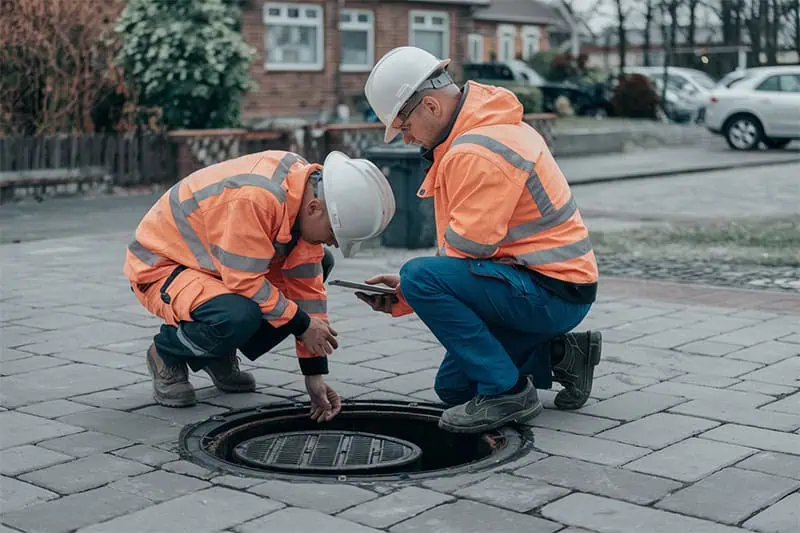
What does a field service technician do?
The role covers whatever the work order demands. This includes installing new equipment, diagnosing and repairing faults, running scheduled inspections, or responding to emergency callouts. What sets this role apart is location: the work takes place wherever the asset is – from substations to cell towers, rail yards, or residential homes – never at a fixed workbench.
A single technician relies on a mix of industry-specific technical skills and safety certifications. Today, they also need full proficiency with mobile apps that deliver job details, digital work instructions, and asset history to their device.
Key responsibilities & workflows
- Traveling to the job site and confirming the work order matches what’s actually needed
- Installing, repairing, or maintaining equipment according to manufacturer specs and safety procedures
- Diagnosing faults using tools, sensor data, or guided digital work instructions
- Documenting the visit: parts used, time spent, condition observed, photos where required
- Communicating status and any delays to a dispatcher and, often, directly to the customer
- Closing out the job in the system so billing, inventory, and asset history all update
The field technician role in a modern field service ecosystem
Without dedicated software, technicians receive jobs by phone, rely on memory or paper notes, and report back manually. In a connected field service management setup, technicians receive job details, asset history, and digital work instructions directly on their mobile device. Real-time status updates automatically, triggering downstream workflows – from billing and inventory adjustments, to updated asset records upon job completion. The core role remains unchanged; what changes is the speed, accuracy and innovation delivered straight to their fingertips.
Field service technician vs. related roles
A dispatcher schedules and assigns work; a technician executes it. A generic service technician typically works from a fixed location, such as a repair counter. In contrast, a field service technician’s defining trait is mobility—delivering hands-on service wherever the asset is located. Meanwhile, a field engineer often focuses on complex technical specifications or design-level troubleshooting. However, many organizations use these titles interchangeably.
Industry-specific skills & certifications
Energy & utilities: electrical safety certification, high-voltage or gas-line specific training, and often a license tied to the equipment class being serviced.
Telecommunications: structured cabling, fiber splicing, and RF or network diagnostics certifications, plus vendor-specific equipment training.
Transportation: mechanical and diagnostic certifications specific to rolling stock, fleet vehicles, or rail signaling systems, often with a regulatory licensing component.
A dispatcher plans and assigns work from an office or remote location. A field service technician is the person who physically travels to the job site and performs the work the dispatcher assigned.
Industry-specific hand and diagnostic tools, plus, in most modern operations, a mobile device running field service software that delivers job details, digital work instructions, and asset history and lets them log completion on-site.
It varies heavily by industry: electrical safety and high-voltage training in utilities, structured cabling and RF certifications in telecom, and vehicle- or rail-specific mechanical certifications in transportation, often alongside a general safety certification for working in the field.
Often used interchangeably, but where organizations distinguish them, “engineer” tends to imply more design, specification, or escalation-level work, while “technician” implies executing defined, standardized jobs.
The job travels to the equipment or customer instead of the customer or equipment coming to a shop, which brings challenges, travel time, variable connectivity, safety in unfamiliar environments, that a bench-based technician doesn’t face.
OverIT’s NextGen FSM delivers job assignments, digital work instructions, and asset history directly to a technician’s device, with offline support for low-connectivity field sites.